TRCS: Shaking things up in the face of Adversity
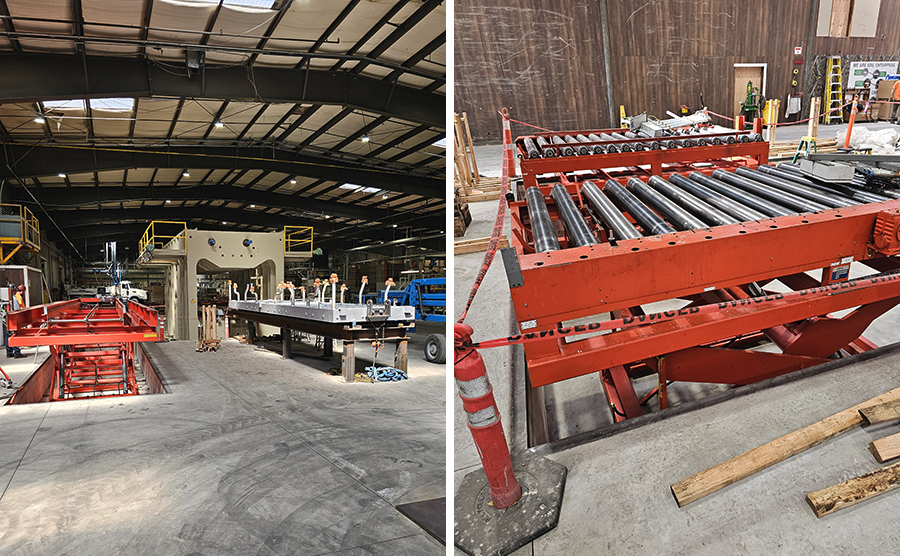
The Timber Products Table Rock Composite Specialties facility in White City, Oregon is undergoing a construction project as a result of the installation of a new TFL Line, impacting routine mill operations.
The installation of the new Thermally Fused Lamination line (TFL) is a necessary upgrade to the facility. The current TFL line is “structurally failing”, causing the line to get fixed constantly as the repairs have proven only to be temporary. This was becoming a recurring problem with the line getting fixed at one spot only for another issue to appear at a different spot shortly after. Director of Composite Manufacturing , Dennis Tally, explains in more detail: “…the frames that contain the pressing force required for lamination are cracking. As one crack is repaired another one occurs in a nearby or opposing location. We repair the cracks that we can see but there are some located in areas we can’t physically get to. Based on our experiences we are confident that a catastrophic failure is eminent”. Because of this, the current TFL line is not adequate nor sustainable for it to be running at the capacity the production demands as it’s causing constant and disruptive shutdowns for it to be maintained.
But then a glimpse of hope showed up in the midst of recurring headaches. A unit became available for sale as a result of the permanent shutdown of a different wood manufacturer’s facility; One that just happened to not only meet but surpass the criteria the team was looking for at Table Rock. The new TFL line will be bigger coming at a size of 5’x24’ compared to the current one at 5’x12’. It is also significantly more automated and will run 3 times faster than our current line. In addition, there is also a larger infeed accumulator which allows for more substrates to be staged and packaged with two independent paper pulls. Due to his recognized expertise in the subject, Terry Velasco was put in charge of this new installation and is guiding the team as Project Manager. “After holding meetings with the OEM (Dieffenbacher) we felt confident that this line was sound and capable of fulfilling both our current and future TFL expansion opportunity needs.” Dennis stated.
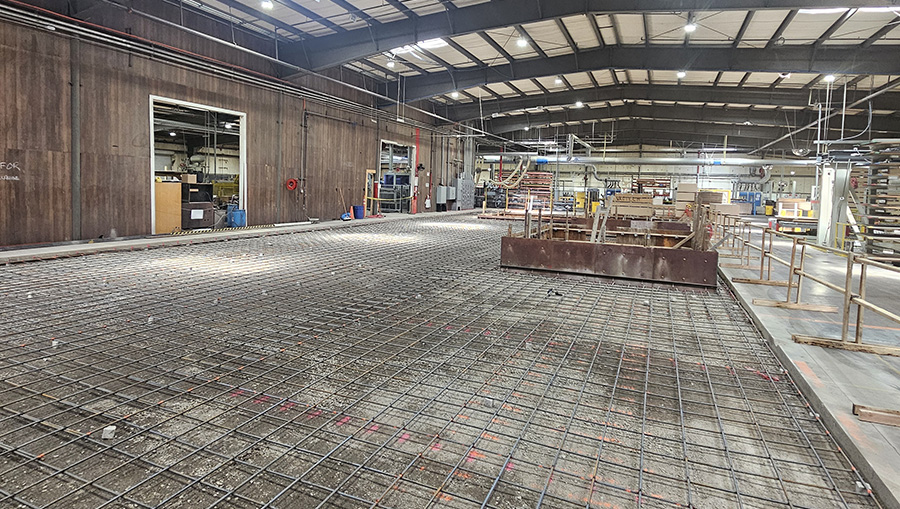
Equipment reconditioning began in December of last year and preparation of the designated area is currently in progress. The construction is divided into three overlapping phases: Phase one – Dirt work and concrete, Phase Two – Equipment Reinstallation, and Phase Three – Electrical wiring and wire termination. A harsh but necessary facility modification in order to start up construction was clearing up the floor space where the line would be positioned. This meant having to completely tear down the only office space of the building located in the middle of the plant. This has caused our office staff to have to work out of construction trailers outside of the facility until construction ceases and a new dedicated space is assigned.
However, this is only the tip of the iceberg of the impacts caused by construction. Over 20,000 square feet of storage has been lost and production has been greatly affected as mill employees work in small and often cramped spaces around machines that had to be temporarily relocated to accommodate the designated space during Phase I. Some of the machines that had to be moved include the Weeke, Vantech and Ambition Machinery. “We are running an extremely tight process” Tally claimed. While they have lost significant space in what is already considered the smallest of our mills in Southern Oregon, customer production expectations remain the same, adding more pressure to current mill operations.
Despite these difficulties and some delays due to electrical and logistical issues with equipment transfers, there’s been positive progress with construction going as planned. At the time of the release of this edition, Phase I should’ve culminated at the start of May and Phase II must have followed shortly after. “…It is looking like we will be delayed to September” Dennis stated. The current TFL line will continue to operate normally until several tests have been performed in the new line to confirm a successful state of operation.
TRCS has undergone multiple internal changes that at this point appear as if they’ve become a part of their regular routine. However, this also demonstrates the perseverance our team has had over the years. A light at the end of the tunnel looks brighter each day as more progress is made and the rest of Timber Products can only cheer for the future of the mill with the productivity goals this new TFL Line will be bringing to their operations.